
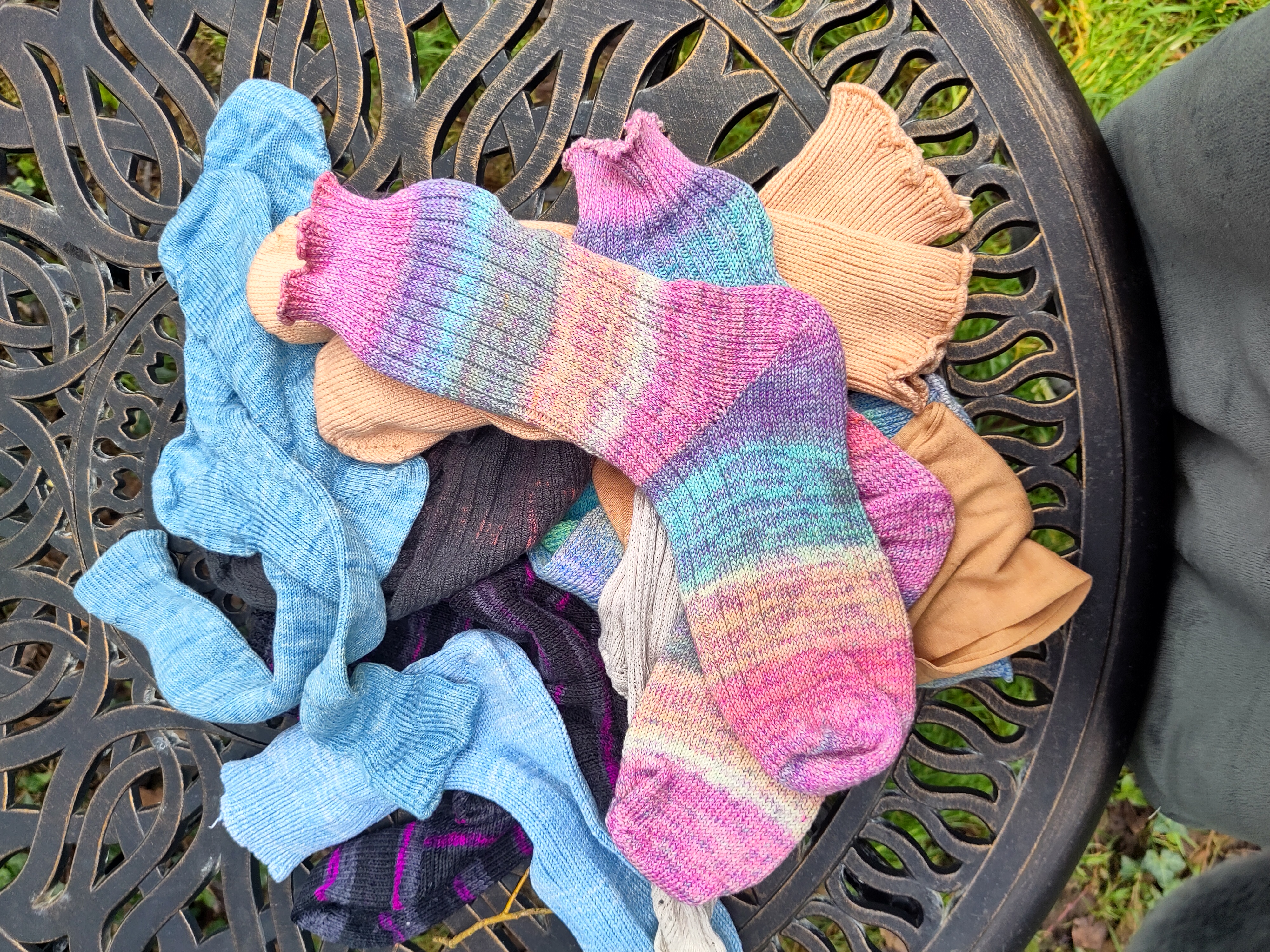
Perfection probably varies from person to person, but I was looking for a sustainable, durable, warm and soft cotton sock that didn’t fall down too quickly!
I have heard it said that vegan socks can never be both sustainable and able to retain their shape. Perhaps it is always a balance between the two aims. However, in years gone by people knitted beautiful cotton socks without lycra, and indeed stockings. This gives me hope. They probably didn’t stay up as well as woollen socks but they must have kept some shape as so many were made and worn? The ladies who wore them appear to have been reasonably wealthy, so could have chosen wool had they wished. Garters were important, so maybe I should take to wearing those. Latex elastic might also be added to the cuff. A quick search of the internet showed it was possible to buy latex elastic. Finally, stockings could be fully fashioned to fit the legs of individuals. I could do that, though it would be a bit fiddly. More on Victorian stockings here.
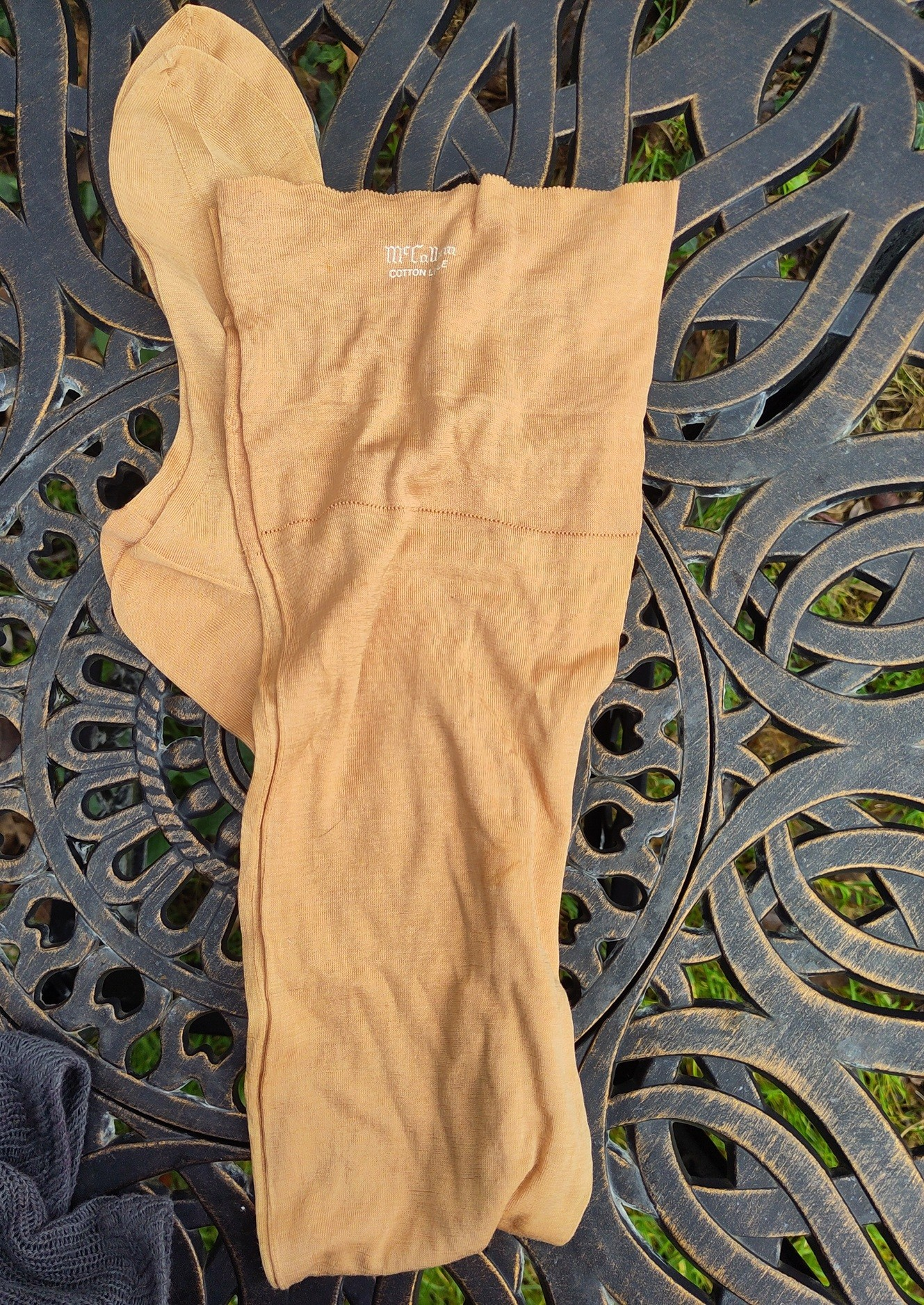
I bought some cotton stockings off Ebay to examine, probably from the 1920s. They are very finely knit of course, possible since they are machine made, and they do have some stretch. They are made from cotton lisle, a tightly twisted mercerised cotton
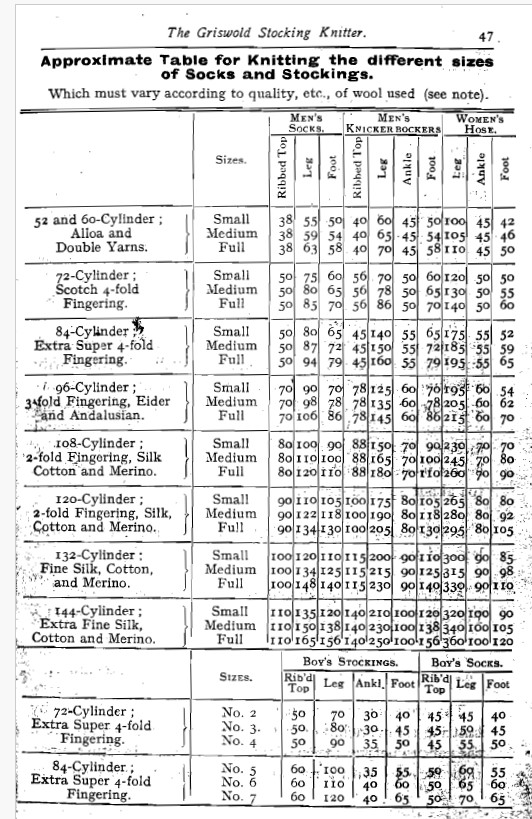
It also seems that c1900 sock knitting machines were considered able to knit cotton socks. Here is a page from the Griswold knitting machine instructions. Note that the higher count cylinders are considered suitable for knitting cotton.
I have been experimenting to see which is the best material and technique using the criteria of warmth, durability, sustainability and stretchability.
In the past have tried acrylic but of course that isn’t environmentally friendly. I’ve also tried Pleiades sock yarn which I found a little stiff and it has an elastic (non-environmentally friendly) core to the yarn. However, I know some people really like it.
So far, Katia Genesis yarn seems a reasonable contender for making cotton socks, though unfortunately the yarn is discontinued. To me it seems reasonably soft, though not perfect. It is pretty. It contains 50% cotton and 50% upcycled marine plastic, so it helps the seas cleaner. However, of course this means some of it is not biodegradable.
Fine pima cotton is also good and is softer than Katia Genesis. This cotton has a longer staple than many other cottons and is grown in Peru and the south west US. It is extremely soft. Organic cotton is obviously better, though cotton does take a lot of water to produce. Obviously it stays up better with lycra. I have added cobweb lycra which although not biodegradable can be used in very small amounts. So this is a bit of a compromise, The socks are soft and stretchy and retain shape. I have worn some for over a year (obviously taking them off to wash).
Fine yarn, closely knit appears to help stretchiness. While it is possible to knit very finely, I have a c.1910 sock knitting machine which can help, an Imperia. Unfortunately, unlike the suggestion in the Griswold Instructions, I don’t have a 108 slot cylinder. Perhaps I should get one.
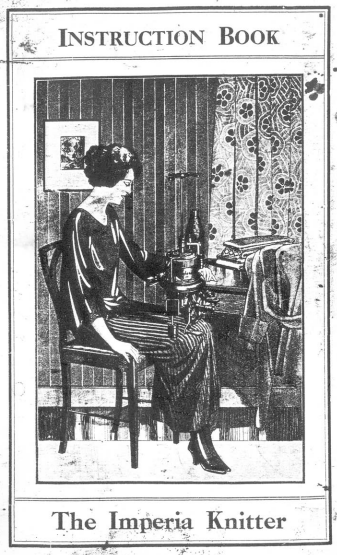
I don’t look as elegant as the lady in the picture!
Making socks ribbed also seems to help, so I have been experimenting with ribbing and even wandered round the house in differently ribbed socks to see which works best. A 1×1 rib keeps its shape best.
At present (2/2/25) I do have a couple of pairs vegan socks in my shop and will add more, especially as I research.
And, I think I’ve just found the perfect sock yarn Cumbia Pascuali- more anon.







No responses yet